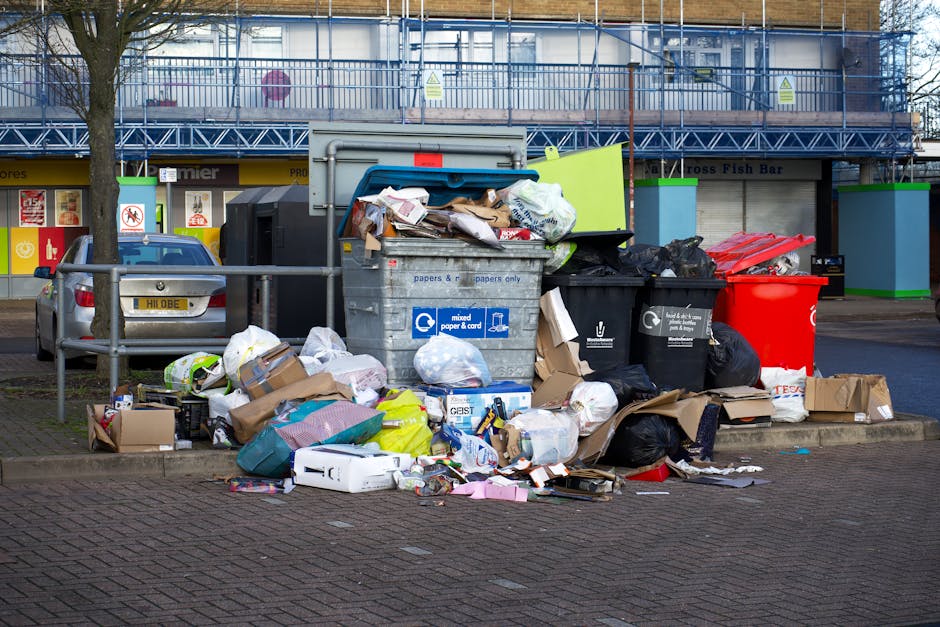
Islington council rules mattress disposal for cleaners
Posted on 13/06/2026

Islington council rules mattress disposal for cleaners: what to know before you move, clean, or clear a property
If you clean homes, manage turnovers, or help with end-of-tenancy work in north London, mattress disposal can become one of those awkward jobs that looks simple until it isn't. A bulky mattress takes up space, smells a bit if it has been in storage too long, and often raises the same question: what exactly are the Islington council rules mattress disposal for cleaners need to follow?
The short answer is that cleaners should not treat a mattress like ordinary rubbish. Collection, storage, transport, and presentation all matter, and the safest approach is to handle it as bulky waste unless the property owner or landlord has arranged a different disposal route. In practice, that means knowing when to leave it, when to remove it, and how to avoid nuisance, contamination, and complaints. This guide walks through the common expectations in plain English, with a practical focus on cleaners working in Islington.
And yes, there are a few traps. A mattress shoved into a communal hallway at 8am can cause more trouble than you might expect. Let's keep it simple, sensible, and local.
- Why it matters
- How mattress disposal works in practice
- Key benefits and practical advantages
- Who this is for
- Step-by-step guidance
- Expert tips
- Common mistakes to avoid
- Tools, resources and recommendations
- Law, compliance, standards, and best practice
- Options and comparison table
- Case study example
- Practical checklist
- Conclusion
- Frequently asked questions
Why Islington council rules mattress disposal for cleaners Matters
Mattress disposal matters because a mattress is bulky, awkward, and easy to get wrong. If a cleaner leaves it in the wrong place, mixes it with normal waste, or arranges removal without permission, the result can be complaints from neighbours, a failed end-of-tenancy handover, or extra charges for the client. None of that is ideal when you're trying to finish a job neatly.
In a place like Islington, where many homes are flats, conversions, and managed rental properties, the logistics are often tighter than people expect. Narrow staircases, shared entrances, timed collections, and limited storage space all make mattress disposal more sensitive than a simple bin run. To be fair, that's why so many cleaning teams now treat waste handling as part of the job rather than an afterthought.
There is also a trust issue. Clients assume cleaners know what can be moved, what should be left alone, and what needs separate handling. If you get that wrong once, it can colour the whole relationship. One messy disposal incident can undo an otherwise excellent clean. A bit dramatic? Maybe. But in real life, that is how these things often go.
For end-of-tenancy work especially, mattress disposal can affect the final condition of the property. If the mattress is stained, broken, infested, or no longer needed, the cleaner may need to flag it clearly and help the client decide on the next step. If the mattress is being kept, then it should be protected during the clean and not dragged around like a sack of laundry.
For related property-turnover and local moving contexts, readers often also look at this flat cleaning guide for Islington tenancies and the broader advice on end-of-tenancy cleaning in Islington.
How Islington council rules mattress disposal for cleaners Works
The practical reality is this: cleaners usually do not "dispose" of a mattress in the everyday sense. They identify it, confirm who is responsible for it, and use an approved removal route. That route may be arranged by the landlord, the tenant, the managing agent, or the cleaning company if the service includes waste handling.
From an operational point of view, the process usually follows a few simple stages:
- Identify the mattress type and condition. A standard domestic mattress is different from one that is heavily soiled, damp, damaged, or potentially contaminated.
- Check the job scope. Is removal included in the cleaning quote, or is the mattress supposed to stay on site?
- Confirm responsibility. The person commissioning the job should make clear who owns the mattress and who has authority to dispose of it.
- Choose the correct disposal method. That might mean a bulky waste collection, a licensed waste carrier, or another agreed route.
- Move it safely. Protect walls, lifts, stairwells, and communal areas while transporting it.
- Document the outcome. A quick note, photo, or job record can save a lot of arguing later. Small detail, big payoff.
Cleaners working in rental properties often find that the biggest issue is not the mattress itself but the lack of clarity around it. "Can you just take it away?" is a very common phrase. Reasonable enough, but only if the cleaning team is set up to do that lawfully and safely.
In some cases, the cleaner may recommend a specialist disposal or deep-cleaning route rather than standard cleaning alone. If the mattress has stains, odours, or visible dust build-up, the property may also need deep cleaning support or even a full spring clean before the space is ready for handover. Different situation, different fix.
For cleaners offering a broader service mix, it helps to keep the process consistent with the rest of the business. See also the services overview and the practical notes in one-off cleaning in Islington.
Key Benefits and Practical Advantages
When mattress disposal is handled properly, everyone's life gets easier. That sounds obvious, but it really is one of those small jobs that prevents bigger problems later.
- Cleaner handovers. A property with properly managed bulky waste feels organised, not abandoned.
- Fewer disputes. Clear disposal steps reduce arguments about who agreed to what.
- Better safety. Mattresses are awkward to carry and can cause trips, strains, or scratches if rushed.
- Less chance of contamination. If a mattress is dirty or infested, proper handling protects the property and the team.
- Stronger reputation. Clients notice when a cleaner thinks ahead instead of improvising.
There is also a time-saving benefit. A well-planned disposal process avoids the classic back-and-forth of "Can we leave it here?" "Who is collecting it?" "Is the lift booked?" In busy London properties, that admin can be half the battle.
If you are comparing service types, the handling standards you expect from a cleaning team will often differ between domestic cleaning, house cleaning, and office cleaning. Mattress disposal is mainly a residential issue, but the same principle applies: define the scope early.
Who This Is For and When It Makes Sense
This topic matters to a few different groups, and the pressure points are not quite the same for each one.
- Cleaners and cleaning companies who need to know what they can remove and how to do it safely.
- Tenants who are leaving a property and want the final clean to go smoothly.
- Landlords and letting agents who need a property prepared for new occupancy without leftover bulk waste.
- Homeowners doing a clear-out after renovation, guest room changes, or a move.
- Property managers dealing with furnished flats, void periods, or damaged items.
It makes sense to think about mattress disposal when the item is no longer fit for use, cannot be hygienically retained, or is blocking the rest of the cleaning job. For example, if a mattress is left upright in a bedroom during a deep clean, it can hold dust, block access, and make the room awkward to finish properly. That's the kind of thing that slows down a job at 4:30pm when everyone would rather be done.
Local context matters too. If you live near busy roads or in a tall apartment block, waste access and timing can be trickier. Readers looking for broader local context often find the article on living in Islington helpful, even though it is not about waste specifically. The everyday logistics are part of the story.
Step-by-Step Guidance
Here is a practical way to handle mattress disposal without overcomplicating it.
- Inspect the mattress first. Check whether it is dry, damaged, stained, or potentially contaminated. If it is wet or heavily soiled, do not drag it through the property casually.
- Confirm authority. Make sure the person asking for disposal has the right to do so. A cleaner should not guess. Ever. Well, almost ever.
- Ask what the client expects. Some clients want the mattress removed completely; others only want it moved to a staging area for later collection.
- Check access. Measure doorways if needed, look at stairs, and note whether the item can be removed without damage.
- Protect the route. Use coverings or careful lifting techniques to avoid scuffs, dirt trails, and clipped corners on walls.
- Arrange the right disposal channel. If the job includes removal, use the agreed route and keep records. If it does not, leave the mattress in the agreed place only.
- Clean around the removed item. Once the mattress is gone, vacuum or wipe the surrounding area so dust, lint, and debris do not linger.
- Record what happened. A short note and, where appropriate, a photo is useful for both cleaners and clients.
If you are doing a move-out clean, it is smart to coordinate mattress handling with other tasks like carpet cleaning or upholstery work. For example, a heavy mattress placed back into a room before the carpet is dry is just asking for trouble. Timing matters more than people think.
For related pricing and service planning, the pages on pricing and quotes and the more specific carpet cleaning cost guide can help set expectations around bundled work.
Expert Tips for Better Results
A few small habits make mattress disposal far smoother.
- Use a written scope. If removal is included, say so clearly. If not, say that too.
- Ask about packaging. A simple mattress cover can reduce mess during transport and storage.
- Do the bulky item early. It is usually better to remove the mattress before the finishing touches, not after.
- Keep a damp-item rule. If the mattress is damp, treat it cautiously and avoid sealing moisture inside anything for too long.
- Watch shared spaces. Communal hallways are where complaints are born. Quietly, almost always there.
- Separate disposal from cleaning. A proper clean is not the same as a proper removal. They are related, but not identical.
In our experience, the best cleaners are the ones who talk about these things before the job starts. It saves everyone the awkward "oh, by the way..." conversation at the front door. And yes, that conversation always happens when someone is already wearing gloves.
If your work regularly includes awkward furniture or heavy items, it can help to build your process around deep cleaning and upholstery cleaning workflows, because the same care around fabric, staining, and access tends to apply.

Common Mistakes to Avoid
Most problems are not mysterious. They are usually a result of rushing, assuming, or not asking one basic question.
- Assuming the mattress can go in normal waste. It usually cannot. Bulk items need proper handling.
- Leaving it in a communal area. A mattress in a hallway can become a complaint very quickly.
- Not checking who owns it. Responsibility matters. If ownership is unclear, stop and clarify.
- Dragging it through the property without protection. Scuffed paint, dirty marks, and damaged corners are expensive mistakes.
- Forgetting about access constraints. Lift restrictions, stair widths, and collection timing can all affect the plan.
- Not documenting the disposal. If a client later says the mattress vanished without permission, you want notes.
One more easy mistake: forgetting that a "clean mattress" and a "disposable mattress" are not the same thing. A mattress can look fine and still need to go because it has lost support, smells musty, or has become a storage problem. Furniture is funny like that. It ages quietly, then suddenly not quietly at all.
Tools, Resources and Recommendations
You do not need a warehouse full of specialist kit, but a few basics make the job safer and tidier.
| Tool or resource | What it helps with | Practical note |
|---|---|---|
| Mattress cover or wrapping | Protecting hallways, lifts, and other items | Useful for cleaner transport, especially in shared buildings |
| Gloves and safe lifting technique | Reducing strain and grip issues | Basic, but worth getting right every time |
| Protective floor covering | Preventing marks during removal | Handy when a mattress has visible dirt or dust |
| Job checklist | Confirming scope, access, and disposal route | Stops the classic "I thought you were sorting that" problem |
| Job photos or notes | Recording condition and agreed outcome | Especially useful for end-of-tenancy work |
For service planning and business process support, it can also be useful to review insurance and safety guidance and the company's health and safety policy. Those pages help frame how a professional team thinks about risk, lifting, and property protection.
If a mattress disposal issue sits alongside a broader move-out, the article on sofa cleaning hidden fees is also worth a look because it shows how bundled work can change expectations quickly. Different item, same need for clarity.
Law, Compliance, Standards, and Best Practice
When people ask about council rules, what they often really want is certainty: what can I do, what should I avoid, and what is a professional standard? For cleaners, the safest approach is to treat mattress disposal as part of lawful waste handling, not a casual favour.
In practice, that means following the normal UK expectations around proper waste transfer, keeping waste out of public nuisance situations, and making sure any third-party disposal route is suitable for bulky items. Cleaners should avoid leaving waste where it obstructs access, creates hygiene issues, or breaches building rules. If the mattress is contaminated, damaged, or infested, extra caution is sensible. No one wants to make a small problem into a building-wide one.
Best practice usually includes:
- getting the client's instruction in writing where possible
- confirming whether removal is included in the service
- using a safe, documented disposal route
- protecting shared areas and preventing nuisance
- keeping a record for the job file
It is also good practice to respect the difference between a cleaning contract and a waste-removal service. A cleaner may be perfectly capable of moving a mattress, but that does not automatically mean they should remove it without a proper arrangement. That distinction matters. A lot, actually.
For businesses that want to keep their operations transparent and professionally grounded, pages like terms and conditions, privacy policy, and complaints procedure help show how customer expectations are managed. And if you want an overview of the business itself, the about us page gives the broader service context.
Options, Methods, or Comparison Table
There is more than one way to deal with a mattress, and the right choice depends on condition, ownership, access, and urgency.
| Method | Best for | Pros | Watch-outs |
|---|---|---|---|
| Leave on site for owner collection | Client already has a plan | Simple, low effort, clear responsibility | Must be stored safely and not block the property |
| Arrange bulky waste removal | Mattress needs prompt disposal | More efficient for end-of-tenancy or clear-outs | Needs correct arrangement and safe handling |
| Move to a designated storage area | Waiting for later collection | Keeps the main rooms clear | Storage must be approved and secure |
| Refuse removal and only clean around it | Removal not included in scope | Protects the cleaner from scope creep | Client must understand this before work begins |
For many cleaners, the best choice is the simplest one that is clearly agreed in advance. If that sounds a bit unglamorous, well, yes, it is. But unglamorous is often what keeps jobs tidy and profitable.
Case Study or Real-World Example
Here is a realistic example from a typical Islington move-out situation.
A tenant is leaving a first-floor flat. The bedroom mattress is heavily marked, the bed base is being replaced, and the property needs to be handed back the same day. The cleaner arrives to complete the final clean and is told, halfway through, "Can you take the mattress too?"
That is exactly the kind of moment where a good process matters. The cleaner checks whether disposal was included in the booking, confirms with the tenant who owns the mattress, looks at the stairwell and hallway, and then decides whether removal can be done safely and lawfully within the job. If not, the mattress is left in a safe agreed spot for the owner's collection. The room is cleaned around the item, then finished once the route is clear.
The result? No hallway dispute, no scratched walls, no last-minute panic, and no confusion on move-out day. Not glamorous, but very effective. The tenant gets a cleaner handover. The cleaner keeps control of the scope. The landlord gets a property that looks handled, not hacked together.
This is also where broader service pairing can help. In a full turnover, mattress disposal often sits alongside carpet work, upholstery work, and general dust removal. If you are working in that space, the pages on carpet cleaning in Islington and one-off cleaning are useful because they reflect the same practical rhythm: inspect, plan, execute, confirm.
Practical Checklist
Use this quick checklist before a mattress is moved or disposed of during a clean.
- Confirm ownership of the mattress.
- Check whether removal is included in the cleaning agreement.
- Inspect condition for stains, dampness, damage, or contamination.
- Review access through doors, stairs, lifts, and communal areas.
- Protect the route with covers or careful handling.
- Choose an approved disposal method if the mattress is being removed.
- Keep the item out of shared spaces unless explicitly agreed.
- Document the outcome with notes or photos where appropriate.
- Finish the surrounding clean after the mattress is gone.
- Tell the client clearly what was done and what remains their responsibility.
Simple list, but it saves a lot of hassle.
Get a free quote today and see how much you can save.
Conclusion
Islington council rules mattress disposal for cleaners are really about good judgement, proper handling, and clear responsibility. If a mattress needs to go, the cleaner should know whether they are moving it, storing it, or arranging disposal through a proper route. If it is staying, it should be handled with care and left exactly where agreed.
What readers usually need most is not a pile of theory, but a calm, practical process they can follow without second-guessing everything. That is the point here. When mattress disposal is planned well, the clean goes smoother, the property looks better, and nobody is left standing in a hallway asking why the bulky item is still there.
Clean work tends to feel best when the details are handled quietly and properly. That is true in a small studio flat, a family house, or a top-floor Islington conversion with a very narrow staircase and one slightly grumpy lift. In the end, careful handling is what makes the whole job feel professional.